
In the world of municipal utility management, set it and forget it is a dangerous philosophy. For many Regional Sewer Districts (RSDs), the rate ordinances and Equivalent Domestic Unit (EDU) tables established at their inception are often tucked into a drawer and left untouched for decades. However, as business uses evolve and water consumption patterns shift, an outdated EDU assessment doesn’t just represent old data it represents a potential significant loss of revenue.
What is the EDU Assessment Table?
The EDU assessment table is the financial heartbeat of a sewer utility where metering is not practical nor prudent. It translates the flow from non-residential customers like schools, churches, and industrial facilities into a standard unit equivalent to a single-family home. When the data in this table is accurate, it ensures that every user pays their fair share for the strain they put on the system. When it is outdated, the burden of maintaining the infrastructure often falls disproportionately on residential homeowners.
The Cost of Stagnation: A Case Study
Recently, BCS Management conducted a comprehensive commercial EDU assessment for the Taylor Regional Sewer District (TRSD). Before our intervention, the district’s assessment calculations had not been updated in over 20 years dating back to its original 2005 resolution.
Over two decades, the landscape of the district had changed. Small businesses had expanded, churches had added schools and daycare centers, and service stations had evolved into high-traffic convenience stores. Because the district was still billing based on 20-year-old data, they were significantly under-recovering costs from their largest users.
To address these gaps, BCS Management performed a survey of every non-residential customer within the district to obtain accurate, current operational data. While we maintained the district’s existing base calculation formula to ensure regulatory consistency, we applied the modernized flow factors outlined in Rule 327 IAC 3-6-11 to the newly gathered survey data. This update to customer profiles revealed a massive disparity between actual system impact and historical billing.
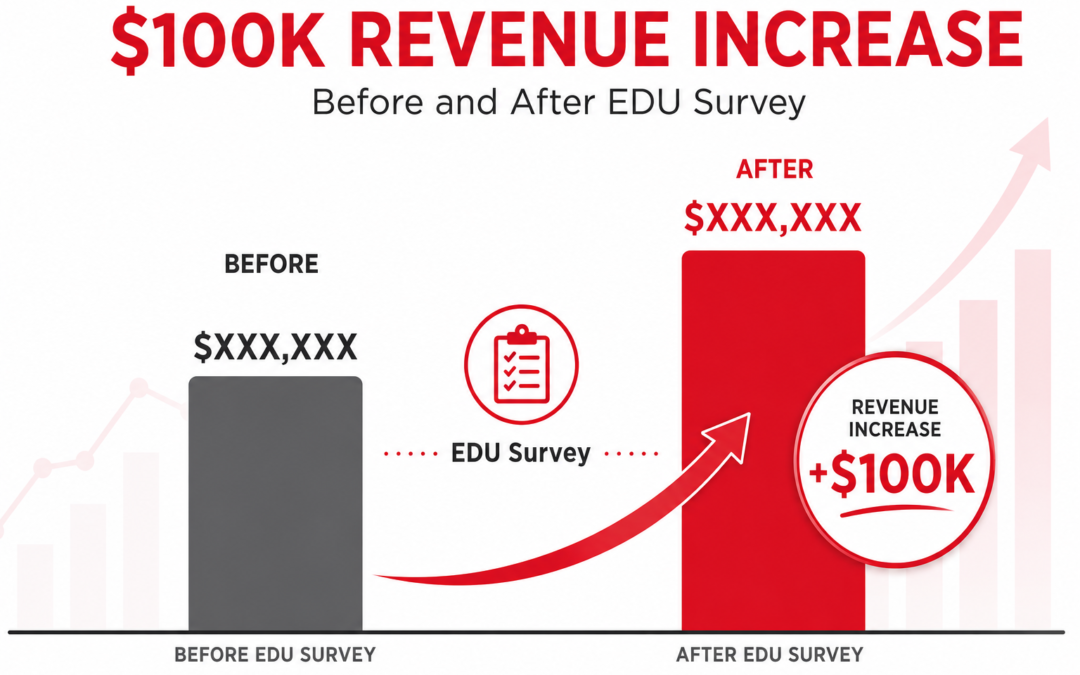
The result? The assessment identified nearly $100,000 per year in additional recurring revenue for the RSD. This wasn’t a rate increase; it was simply the result of ensuring that non-residential customers were finally billed accurately for their actual footprint.
The 1-2 Year Rule
To avoid revenue leakage in the face of changing costs, BCS Management recommends that municipal clients perform a non-residential EDU audit every 1 to 2 years. Regular assessments allow districts to:
- Capture Growth: Identify building additions or changes in business operations (e.g., a warehouse adding a commercial kitchen).
- Ensure Equity: Maintain fairness across the customer base so that residents aren’t subsidizing commercial growth.
- Fund Infrastructure: Direct the recovered revenue toward much-needed capital improvements and system maintenance.
Comprehensive Utility Administration
An EDU assessment is more than just a math exercise; it is a vital part of proactive utility governance. At BCS Management, this is just one component of our comprehensive utility and RSD administration services. From feasibility studies and grant writing to day-to-day administrative oversight, we help municipal leaders turn their utilities into efficient, self-sustaining assets.
Is your district operating on old data? It’s time to find out what you’re leaving on the table. Contact BCS today to start a conversation.